
Council backs Local Plan to shape growth in the Cotswolds
Cotswold District Council has voted to progress a new Local Plan for the district, setting out how almost 19,000 new homes could be delivered over the next 17 years while protecting the landscapes, heritage and character that make the Cotswolds so special.
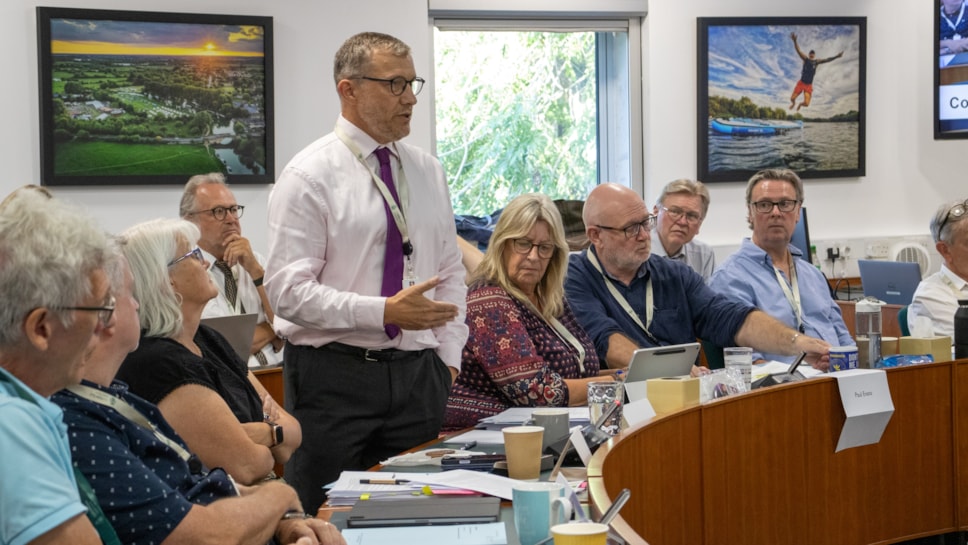
At a Full Council meeting on 12 August, members of the public quizzed councillors before a passionate debate highlighted how the ambitious housing requirement set by central government could affect communities.
The debate reflected on the difficult choices the Council has faced in responding to changes to national planning policy in late 2024, which led to the district’s housing need more than doubling.
Comments from members centred around whether that need for new homes should be planned by the Council – bringing with it new schools, local centres and open spaces, or left unplanned – with housing developments coming forward on a piecemeal basis, and without guarantees of any supporting infrastructure.
Work to update the Local Plan has been ongoing for a number of years, but last Summer, the Council unanimously agreed to undertake a full update to address new housing need.
The draft plan, which will now go to public consultation on 24 August for six weeks, before it is submitted to the Planning Inspectorate in December for examination, sets out a robust, evidence-led framework for delivering new homes that create communities.
It has been shaped by three previous consultations which generated more than 14,000 comments from residents, businesses, community groups and statutory consultees.
This feedback, along with sites submitted for potential housing development by landowners and more that 40 studies and assessments helped shape the Plan's approach to affordable housing, infrastructure, design, transport, climate action, flooding and wastewater management.
Cllr Mike Evemy, Leader of Cotswold District Council, said: "The choice is as clear now as it was when we met last summer and agreed how to address the Government’s immensely challenging housing target: plan for growth or allow others to decide for us."
"The housing target is too big. We all agree on that.
But without a Plan, those new houses will come site by site, appeal by appeal, with infrastructure negotiated development by development. That creates a patchwork of estates, not communities."
Much of the proposed development would be concentrated on ten strategic sites, enabling infrastructure and community facilities to be planned alongside growth.
During the debate, Cabinet Member for Planning and Regulatory Services, Cllr Juliet Layton, highlighted how public engagement that had informed the Plan.
She said the Plan responds to what residents had asked for during consultation: “It includes infrastructure alongside development, smaller and more affordable homes, new schools and local centres, protection for landscape and heritage, serious action on flooding and wastewater, improved walking, cycling and public transport, and higher standards of design.
She added: "These are homes for care workers, teaching assistants and young families, not more large houses that are beyond the reach of local people."
The proposed Plan includes policies supporting the delivery of around 5,600 affordable homes over the plan period, with a 40% affordable housing requirement on qualifying developments and a greater focus on smaller two and three-bedroom homes that better meet local needs.
Members objecting to the plan acknowledged the risks of failing to maintain an up-to-date Local Plan but expressed concerns about the scale of housing growth required by national policy, the ability of infrastructure to keep pace with development, and the long-term impact on local communities. During the debate, members described being between "a rock and a hard place", reflecting the difficult balance between protecting communities and retaining local influence over future development.
Responding to those concerns, Cllr Evemy said: "We can either put forward this plan to Regulation 19 consultation, or we can give up."
"This is a plan we can and must get behind. Will growth in our district be shaped through a Plan made locally, with infrastructure and communities at its heart? Or will growth be shaped by a succession of speculative applications, brought forward by developers and landowners? I choose the Plan."
Residents will now be invited to have their say during a six-week consultation running from 24 August to 5 October 2026 before the Plan is submitted for independent examination. The consultation will include public exhibitions and community meetings enabling residents to ask questions before making formal comment.
Contact Information
Cotswold District Council Communications Team
Notes to editors
Notes to editors
The proposed Local Plan includes:
- Around 95% of proposed development outside the Cotswolds National Landscape
- Around 90% of proposed development on strategic allocations
- Policies supporting the delivery of around 5,600 affordable homes
- New and expanded schools, health facilities and community infrastructure
- New employment land and opportunities for economic growth
- Transport improvements, public open space and green infrastructure
- Ambitious climate policies covering net-zero-carbon buildings, renewable energy and low-carbon heat networks
The Plan will now be subject to a six-week public consultation before being submitted to the Planning Inspectorate for independent examination.
Photograph caption - 'Cllr Mike Evemy, Leader of Cotswold District Council presents the case for the Local Plan to the Council'.