
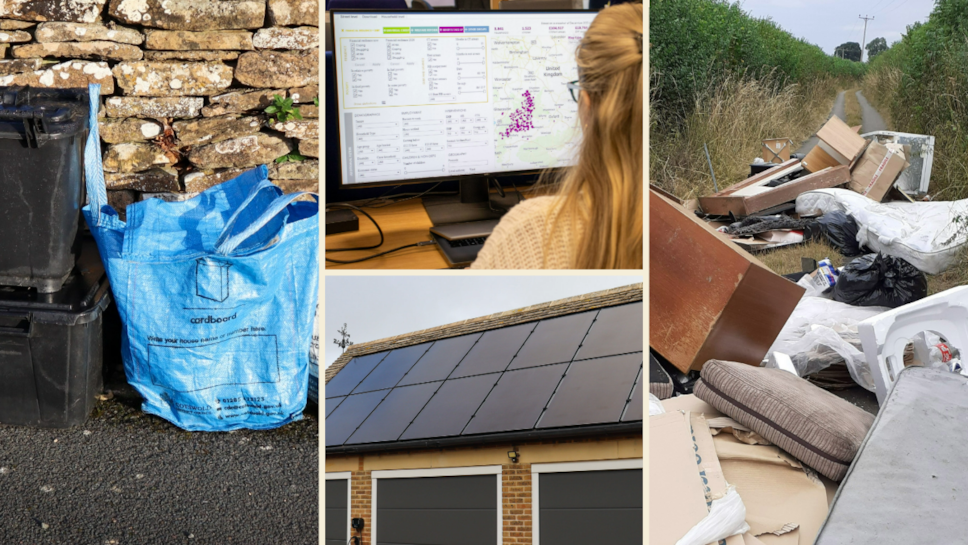
Progress on fly-tipping, solar success and sound finances help deliver good news for Cotswold District Council
Reliable waste collections, successful action against fly-tipping, money-saving solar panels and a strong financial position were among the positive headlines as Cotswold District Council reviewed its latest performance and financial reports.
Cabinet members considered the council’s fourth-quarter Service Performance Report and Financial Performance Report on 1 July, highlighting a year of strong service delivery and careful financial management as the authority prepared to leave a lasting legacy as it moves towards local government reorganisation.
Overall, councillors concluded the reports showed a council performing strongly across many of its key services while maintaining a robust financial footing during a period of significant change.
Positive news on waste and fly-tipping
Among the positive achievements were missed bin collections remaining below target, continued growth in leisure centre memberships, and household residual waste levels falling below target – meaning residents are putting less rubbish into their bins.
The Cabinet also highlighted the work being carried out to tackle fly-tipping. Cabinet Member for Environment and Regulatory Services, Cllr Andrea Pellegram, singled out the efforts of council and Ubico teams, describing them as “very proactive” in responding to incidents and carrying out enforcement activity.
“When complaints come in or where our fly tips are identified, they're very fast as a team to come and get it and clean it up,” she said.
She added that the council had received compliments from residents about the service and recognised staff for their efforts.
Solar success
The Cabinet also highlighted climate initiatives which are delivering financial benefits. Councillor Mike McKeown said the council's solar installations had exceeded expectations, generating significant savings, while electric vehicle chargers were bringing in more income than forecast.
“The solar is overperforming against expectations and has saved us a lot of money – many tens of thousands of pounds from a very sunny June and sunny year,” he said. “Similarly, EV chargers are also generating income significantly ahead of the projected business case.
“Climate change isn't just about saving CO2 ... but also saving the taxpayer money. So, win-win.”
The Cabinet heard that council tax support processing times had improved, while planning income had performed strongly. Cllr Layton praised planning officers for managing a high volume of applications and securing significant income for the authority despite ongoing challenges relating to housing land supply and planning appeals.
Challenges remain
Not all measures were moving in the right direction. On recycling, councillors noted that the district remained among the top-performing authorities nationally. But also, that rates had fallen slightly, reflecting a national trend.
Delays to land charge searches were also highlighted as an area for improvement, but it was reported that recent recruitment was expected to help bring performance back on target.
The council has also seen a higher-than-target rate of planning appeals allowed by the Planning Inspectorate. Councillors acknowledged this was linked to the district's current housing land supply position, which has made it more difficult to defend some planning refusals.
Cllr Layton said the Council knew the new government housing numbers would make this situation inevitable, although she stressed that the council was still winning appeals on smaller planning decisions. “We were expecting this and we’re just going to have to weather this storm for a little bit,” she said.
Positive finances
The Q4 financial report also painted a positive picture. The council finished the year in a stronger-than-expected position, with reserves increasing from just over £11 million to more than £14 million.
Cabinet Member for Finance Cllr Patrick Coleman said that “prudent decisions in the past had borne fruit” and described the council's finances as being in a "comfortable and strategically sound financial position". He praised the Council’s finance team for the work they had done managing the accounts over the year.
Deputy Chief Executive David Stanley highlighted strong planning fee income, higher-than-expected car parking revenue and careful vacancy management as key contributors to the positive outturn.
But while the overall financial picture was positive, councillors noted some areas of pressure. Ubico recorded a larger-than-expected year-end overspend, with officers citing increased vehicle hire costs, agency staff use and employee sickness. The council said it had raised concerns with Ubico about the accuracy of forecasting and would continue to monitor performance closely.
There were also higher than expected costs on postage, linked to an increase in communications with recipients of the LIFT (Low Income Family Tracker) project.
Summing up the reports, Council Leader Mike Evemy said the authority was continuing to deliver strong services while maintaining a careful grip on public finances. He said the council was performing well, investing in key priorities and building resilience as it prepares for local government reorganisation.